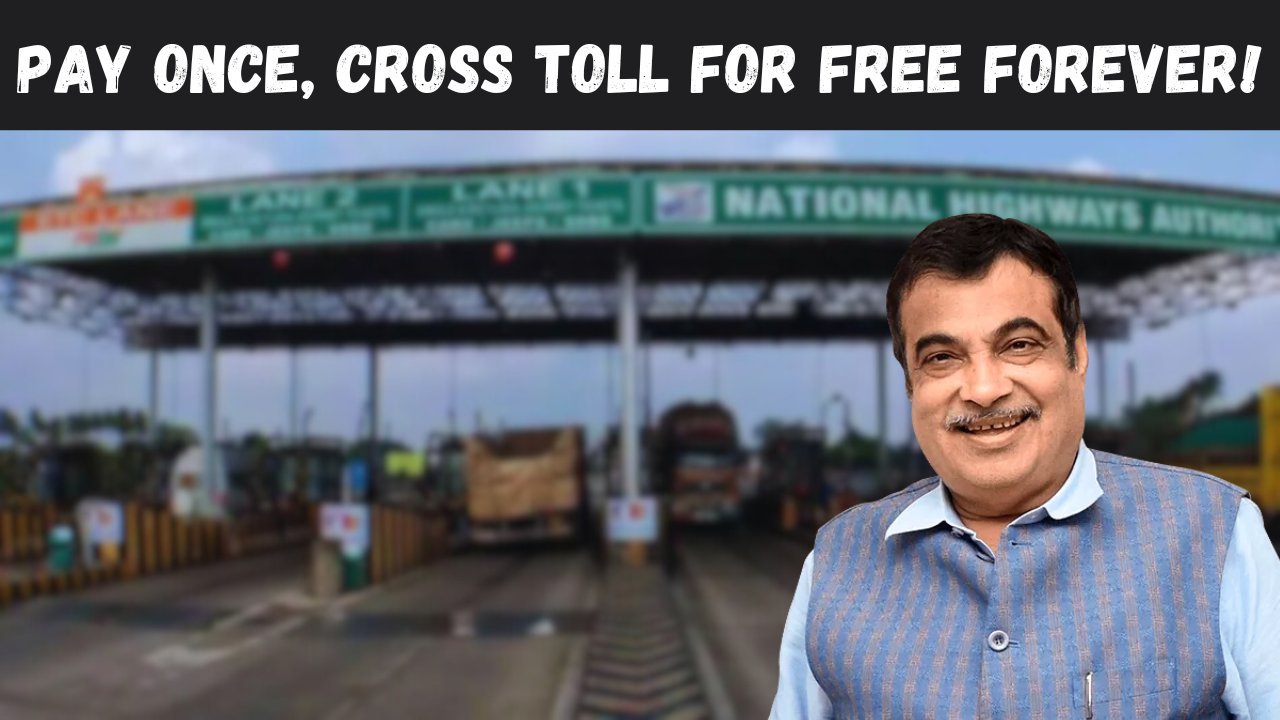
(Toll Tax New Plan) : In a groundbreaking move to revolutionize India’s toll tax system, Union Minister Nitin Gadkari has proposed a new model where commuters can enjoy unlimited free crossings after making a one-time toll payment. This initiative aims to streamline traffic, reduce congestion, and enhance the overall efficiency of toll collection across highways. The plan, if implemented, could bring relief to millions of daily travelers, significantly cutting down wait times at toll plazas.
How the One-Time Payment Toll System Works
The proposed toll reform is designed to eliminate the hassle of repeated toll payments, offering a seamless travel experience. Here’s how it would work:
 Delhi’s New Government Brings Major Benefits: Pensions, Electricity, and Special Schemes for Women
- Single-Time Payment: Travelers will be required to pay a one-time toll fee for a particular stretch of road.
- Unlimited Access: After paying once, users can cross the toll plaza multiple times without any additional charges.
- Digital Implementation: The system will likely be linked with FASTag and other digital payment modes to ensure a smooth transaction process.
- No More Traffic Jams: By eliminating the need to stop for payments, vehicles can move swiftly, reducing congestion.
- Cost-Effective for Regular Commuters: Daily travelers, including office-goers and logistics operators, will benefit from cost savings.
This initiative is expected to work alongside the existing electronic toll collection (ETC) systems, ensuring better management and efficiency.

Benefits of the One-Time Toll Payment System
Nitin Gadkari’s proposed model offers multiple advantages for both commuters and the government:

1. Faster Traffic Flow
- Reduced waiting time at toll booths.
- Continuous movement of vehicles without unnecessary stoppages.
- Improved fuel efficiency and lower emissions due to less idling.
2. Cost Savings for Frequent Travelers
- Regular commuters on national highways will save significantly on daily toll payments.
- Logistics and transport industries will benefit from predictable toll expenses.
3. Enhanced Digital Integration
- Integration with FASTag will make the process cashless and automated.
- Possible introduction of GPS-based tolling for better tracking and cost assessment.
4. Less Operational Costs for the Government
- Lower manpower requirements at toll plazas.
- Reduced maintenance costs due to fewer cash transactions.
- More efficient collection with minimized revenue leakages.
5. Improved Commuter Experience
- Hassle-free journeys with no repeated transactions.
- Encouragement for smoother long-distance travel.
- Boost to tourism as road trips become more convenient.
See More : RBI Provides Big Relief for EMI Payers
Comparison of Current Toll System vs. Proposed One-Time Payment Model
To better understand the advantages, let’s compare the existing toll system with the proposed model:
| Feature | Current Toll System | Proposed One-Time Payment System |
|---|---|---|
| Payment Frequency | Pay per crossing | Pay once for unlimited crossings |
| Waiting Time | Long queues at toll booths | No waiting time |
| Method of Payment | Cash/FASTag | FASTag/Digital mode |
| Traffic Congestion | High | Low |
| Cost for Daily Users | Expensive | More cost-effective |
| Implementation | Manual & Electronic | Fully Digital & Automated |
| Government Revenue | Unstable due to leakages | More efficient & transparent |
This transformation in toll tax policy could redefine road travel efficiency in India.
Potential Challenges and Solutions
Despite its promising benefits, implementing a one-time toll payment model comes with certain challenges. Here’s how they can be addressed:
1. Revenue Collection Concerns
- The government must ensure that the new model does not lead to revenue losses.
- Implementation of GPS-based tolling could help charge vehicles based on distance traveled.
2. System Transition Issues
- The transition from the current toll system to a one-time payment model may require significant infrastructure upgrades.
- A pilot project in select areas can help assess feasibility before a nationwide rollout.
3. Compliance and Enforcement
- Some vehicles may attempt to misuse the system, leading to revenue leaks.
- Digital tracking and AI-based surveillance can help detect fraudulent activities.
4. Initial Cost of Setup
- The government may face high initial investment costs for developing the system.
- Public-private partnerships (PPP) can help share financial burdens.
The Role of Technology in Toll Reforms
Technology will play a crucial role in ensuring the success of this new toll tax model. Here are some key tech solutions:

- FASTag Integration: A more advanced version of FASTag could facilitate one-time payments efficiently.
- GPS-Based Tolling: Vehicles could be charged based on kilometers traveled instead of physical toll plazas.
- AI and Data Analytics: Smart monitoring to prevent revenue leakages and manage traffic flow.
- Blockchain in Toll Payments: A decentralized ledger system could enhance transparency in toll collections.
Expected Impact on Different Sectors
The proposed one-time toll payment system will have a far-reaching impact across various sectors:
| Sector | Expected Impact |
|---|---|
| Daily Commuters | Reduced travel costs and time savings |
| Logistics Industry | Lower operational costs and faster deliveries |
| Tourism | Increased road travel convenience, boosting local tourism |
| Government | More streamlined revenue collection and better infrastructure maintenance |
| Technology Firms | Growth in digital tolling solutions and AI-based monitoring |
If implemented successfully, this toll reform could set a precedent for future smart transport policies.
What Experts Are Saying About This Reform
Many industry leaders and transportation experts have welcomed this initiative. Some key opinions include:
- Traffic and Transport Analyst: “This model will significantly reduce congestion and fuel wastage at toll booths.”
- Government Official: “We aim to modernize India’s road network with digital solutions for a seamless experience.”
- Logistics Company CEO: “The reform will benefit transport businesses by reducing delays and costs.”
These statements highlight the broad acceptance and potential success of the new system.
Final Thoughts: A Step Towards Smarter Roads
Nitin Gadkari’s proposed one-time toll payment system is a major step towards making Indian highways more efficient, reducing traffic congestion, and providing cost benefits to commuters. While challenges exist, with the right technological advancements and strategic implementation, this reform could revolutionize toll collection across the country.
As discussions continue, the public eagerly awaits further details and possible implementation timelines. If executed correctly, this initiative could set a new standard for road transportation in India.

The information in this article is based on publicly available reports and statements from government officials. The final implementation of the toll reform is subject to government policies and regulatory approvals.