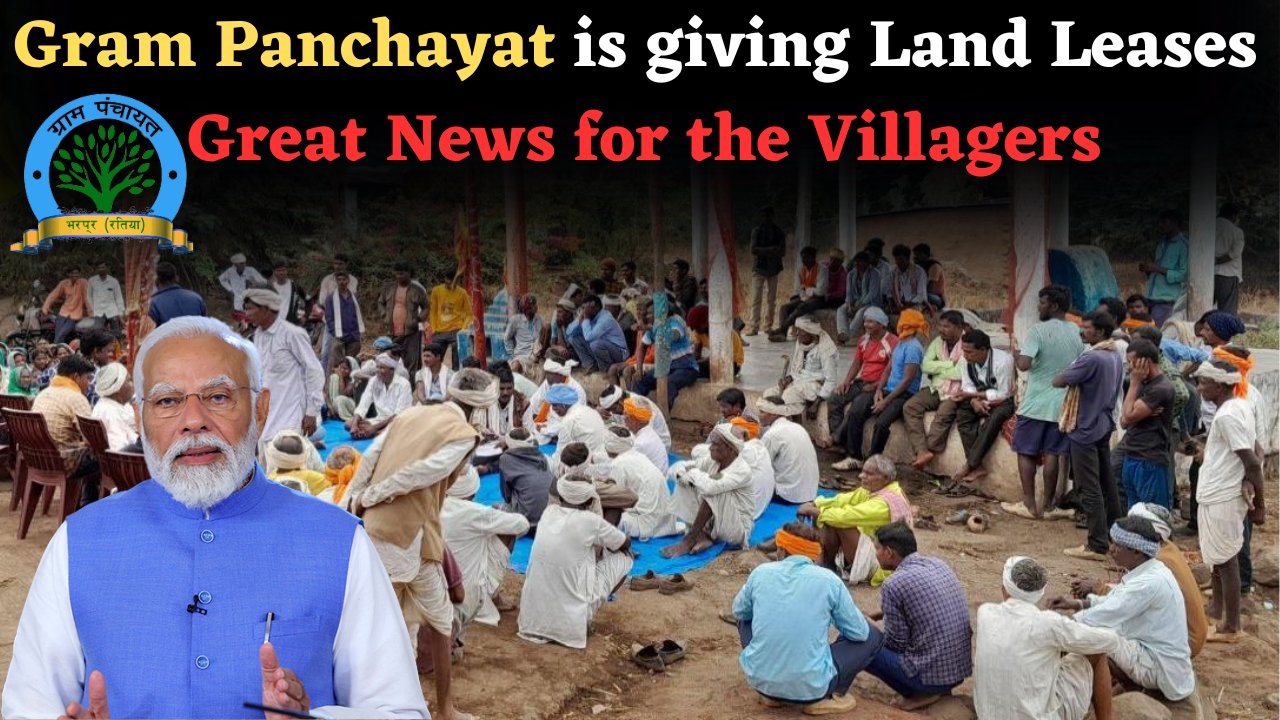
(Gram Panchayat Land Leases) : In a significant move aimed at boosting rural development, Gram Panchayats across various states in India are offering land leases (pattas) to eligible villagers. This initiative seeks to provide land to the landless, secure ownership rights, and promote sustainable agricultural and residential development in rural areas. If you are a resident of a village and wish to apply for a land lease, this guide will provide all the essential details, from eligibility criteria to the application process.
What is a Land Lease (Patta) and Why is it Important?
A land lease or patta is an official document that grants an individual or family the right to use a particular piece of land for residential, agricultural, or commercial purposes. The land remains the property of the government or the Gram Panchayat, but the leaseholder has legal rights to use it as per the lease conditions.

Benefits of Getting a Land Lease:
-
- Legal ownership rights: Reduces the risk of eviction and disputes.
- Eligibility for government schemes: Many agricultural and housing schemes require land ownership.
- Access to loans and subsidies: Banks often ask for land documents for granting loans.
- Land for the landless: Helps poor and underprivileged families secure a piece of land.
- Encourages rural development: Promotes planned land use and reduces illegal encroachments.
Who Can Apply for a Gram Panchayat Land Lease?
To ensure fair distribution of land, the government has set specific eligibility criteria for applicants. These criteria may vary slightly from state to state, but the general requirements are as follows:

Eligibility Criteria:
- Must be a resident of the village where the land is being allocated.
- Should belong to an economically weaker section (BPL, SC/ST, landless laborers, etc.).
- Should not already own land (for certain categories of applicants).
- Must not have been allotted land previously under similar government schemes.
- Should be using the land for intended purposes such as farming or housing.
Exclusions:
- People owning significant land elsewhere.
- Individuals involved in legal disputes over land.
- Those who have already availed similar benefits.
How to Apply for a Gram Panchayat Land Lease?
Applying for a land lease is a simple process, but it requires proper documentation and adherence to government rules. Follow these steps to apply:

Step-by-Step Application Process:
- Visit the Gram Panchayat Office – Inquire about available land and the application form.
- Collect the Application Form – Get it from the Panchayat office or download it from the state government’s website.
- Fill in the Required Details – Provide accurate information such as name, Aadhaar number, income details, and reason for application.
- Attach Necessary Documents – These usually include:
- Aadhaar card
- Ration card
- Income certificate
- Caste certificate (if applicable)
- Proof of residence
- Affidavit stating non-ownership of land
- Submit the Application – Submit the form along with required documents at the Gram Panchayat or Block Development Office.
- Verification Process – Officials will conduct on-site inspections and verify the submitted details.
- Approval and Allotment – Once approved, the applicant will receive an official land lease document.
See More : New Pension Rules 2025
Documents Required for Land Lease Application
Before applying, ensure you have all necessary documents ready. Here is a detailed list:
| Document Name | Purpose of the Document | Issued By |
|---|---|---|
| Aadhaar Card | Proof of identity | UIDAI |
| Ration Card | Proof of economic status | State Government |
| Income Certificate | To verify financial eligibility | Tehsildar/Revenue Dept. |
| Caste Certificate | If applying under reserved category | State Government |
| Proof of Residence | Confirms village residence | Local Authority |
| Landless Affidavit | Declares no land ownership | Notary/Public Official |
States Providing Land Leases Under This Scheme
Several states have actively implemented Gram Panchayat land lease programs. The following states have ongoing schemes:
| State Name | Scheme Name | Eligible Beneficiaries | Application Mode |
|---|---|---|---|
| Uttar Pradesh | Mukhyamantri Awas Yojana | BPL Families | Offline & Online |
| Madhya Pradesh | Land Patta Scheme | SC/ST & Landless Farmers | Offline |
| Rajasthan | Gram Panchayat Lease Scheme | Rural Landless Families | Offline & Online |
| Bihar | Rajya Sarkari Bhumi Vitran Yojana | Poor & Marginalized Groups | Online |
| Karnataka | Panchayat Land Lease Scheme | Farmers & Laborers | Offline |
| Tamil Nadu | Village Land Assignment Scheme | BPL & SC/ST Communities | Online & Offline |
To check the latest updates for your state, visit the official government website or consult the local Gram Panchayat office.
Common Issues Faced by Applicants and Solutions
Many applicants face difficulties during the application process. Here are some common challenges and ways to resolve them:

1. Application Rejection Due to Incomplete Documents
Solution: Double-check document requirements before submission.
2. Delays in Verification Process
Solution: Follow up with local authorities regularly.
3. Land Disputes Over Allocation
Solution: Report issues to the Block Development Officer or file a grievance with the District Collector.
4. Lack of Awareness About the Scheme
Solution: Attend Gram Sabha meetings and consult Panchayat members.
Key Highlights of the Gram Panchayat Land Lease Scheme
- Land leases are primarily aimed at landless rural families.
- The lease period varies, generally ranging from 10 to 99 years.
- The allotted land cannot be sold or transferred without official approval.
- Beneficiaries may receive financial support for developing the land.
- The scheme is being digitized in several states for easy access.
The Gram Panchayat land lease scheme is a golden opportunity for rural families to gain legal land rights and improve their livelihoods. If you or someone you know qualifies for this scheme, apply as soon as possible to secure your land patta. For further assistance, visit your nearest Gram Panchayat Office or check your state government’s website.
By taking advantage of this initiative, villagers can achieve land security, financial stability, and social empowerment in the long run.

The information provided here is based on available government data. Rules and eligibility criteria may vary by state. Always verify details with your local authorities before applying.