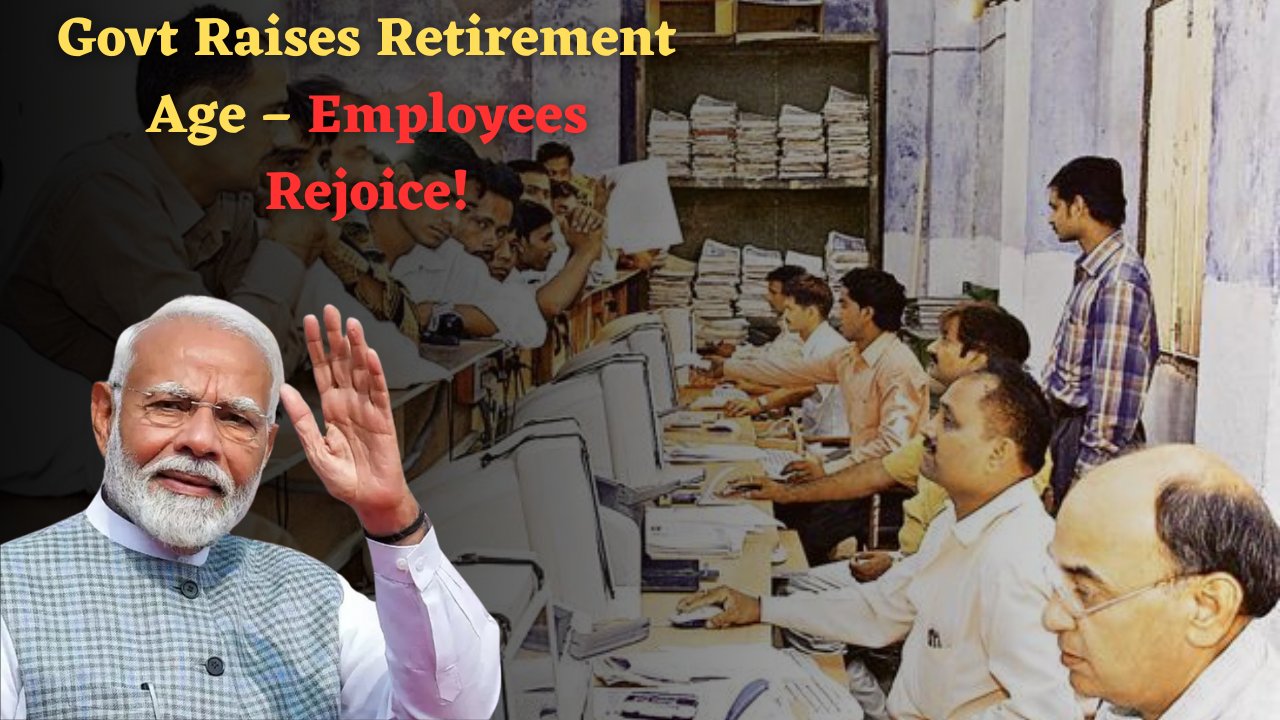
(Government Employees News) : In a significant policy shift, the government has decided to increase the retirement age of government employees. This decision comes as a relief to thousands of employees who were nearing retirement, offering them an extended period of service. The move aims to address various economic and workforce challenges while ensuring that experienced professionals continue contributing to the public sector.
Why the Government Increased the Retirement Age?
The decision to extend the retirement age stems from multiple factors, including:

- Shortage of skilled professionals in crucial government sectors.
- Increasing life expectancy, allowing employees to remain productive for longer.
- Financial stability for employees, reducing the strain on pension funds.
- Efficient workforce utilization, ensuring experienced personnel remain in service.
This reform aligns with global trends where many countries have revised their retirement policies in response to demographic and economic changes.

New Retirement Age Policy: Key Highlights
The government has officially announced changes in the retirement age policy, impacting millions of employees. Below are the key highlights:

- New Retirement Age: Increased from 60 to 62 years (varies by department).
- Implementation Date: Effective from the upcoming financial year.
- Applicable Employees: Covers central and state government employees.
- Pension and Benefits: Employees will continue receiving full salary, perks, and retirement benefits.
- Performance Review: Senior employees may undergo performance evaluations before extension.
- Special Cases: Certain high-risk professions may retain existing retirement limits.
See More : Earn ₹22.78 Lakh by Investing ₹1,000 to ₹7,000 Monthly
Comparative Analysis of Retirement Age Across Sectors
| Sector | Previous Retirement Age | New Retirement Age | Additional Benefits |
|---|---|---|---|
| Central Government | 60 years | 62 years | Extended benefits, pension stability |
| State Government | 58-60 years | 60-62 years | Varies by state policies |
| Judiciary | 62 years | 65 years | Increased tenure for senior judges |
| Armed Forces | 58-60 years | No Change | Based on rank and role |
| Teaching Professionals | 62-65 years | 65-67 years | Additional service tenure |
| Medical Professionals | 60-65 years | 65-70 years | Based on expertise and demand |
| PSU Employees | 58-60 years | 60-62 years | Depends on specific PSU policies |
Benefits of Increasing the Retirement Age
Extending the retirement age brings several advantages, both for employees and the government. Some of the most prominent benefits include:
1. Ensuring Financial Stability for Employees
- Longer employment tenure means higher lifetime earnings.
- Employees can save more for post-retirement security.
- Delayed retirement results in higher pension benefits.
2. Reduced Government Pension Burden
- By delaying retirement, the government reduces immediate pension payouts.
- It allows better management of pension funds over time.
- Encourages self-sufficiency among retirees.
3. Utilization of Skilled Workforce
- Experienced professionals enhance efficiency in government departments.
- Reduces the need for rapid hiring, saving training costs.
- Helps in tackling workforce shortages in key sectors.
4. Alignment with Global Trends
- Many developed countries, including the USA, UK, and Germany, have increased their retirement ages.
- Adapting to changing demographic patterns ensures sustainable workforce planning.
Challenges and Concerns
While the policy change brings many advantages, there are also concerns that need to be addressed:
- Limited Job Opportunities for Younger Generations
With senior employees staying longer, fewer vacancies open up for fresh graduates. - Potential Decrease in Productivity
Some employees may experience reduced efficiency due to aging-related issues. - Sector-Specific Constraints
Physically demanding jobs (e.g., defense forces) may not benefit from this reform.
Impact on Government Employees
| Factor | Impact on Employees |
|---|---|
| Salary & Perks | Employees continue to receive full salary & benefits |
| Promotion Scope | Some employees may face delayed promotions |
| Pension Scheme | Extended service leads to better pension payouts |
| Work-Life Balance | Older employees may find it challenging to cope |
| New Hiring | Limited openings for new job seekers |
Employee Reactions and Public Opinion
Government employees have responded positively to the policy change, particularly those who were approaching retirement. Many have welcomed the decision, citing the following reasons:

- Financial security: Extended employment ensures continued income.
- Professional fulfillment: Many employees wish to contribute beyond 60.
- Healthcare benefits: Employees remain covered under government healthcare schemes.
However, some younger job seekers and labor unions have expressed concerns regarding limited job opportunities and slower career progression.
Countries with Higher Retirement Age: A Global Comparison
| Country | Retirement Age | Reason for Increase |
|---|---|---|
| USA | 66-67 years | Social Security benefits |
| UK | 66 years | Aging population & workforce needs |
| Germany | 67 years | Economic sustainability |
| France | 64 years | Pension fund reforms |
| Japan | 65-70 years | Workforce shortages & longevity |
| India | 60-62 years | Addressing pension burden |
Future Possibilities: Will the Retirement Age Increase Further?
Experts believe that the retirement age could be raised further in the coming decades. Possible future developments include:
- Gradual increase to 65 years for government employees.
- Flexible retirement options allowing employees to opt for extended service.
- Sector-based adjustments where physically demanding jobs retain a lower age limit.
The government may monitor workforce trends and economic conditions before making any further adjustments.
The decision to increase the retirement age marks a significant reform in government employment policies. While it brings financial security and workforce efficiency, it also presents challenges for new job seekers. Policymakers must strike a balance between employment stability and opportunities for the youth.

As India moves toward an ageing yet experienced workforce, such changes will play a crucial role in shaping the future of employment. The government will likely continue evaluating the impact of this reform to ensure a sustainable and productive workforce for years to come.
To bad increase the retirement age